Alfred Hitchcock Presents – A Little Sleep (S2E38)

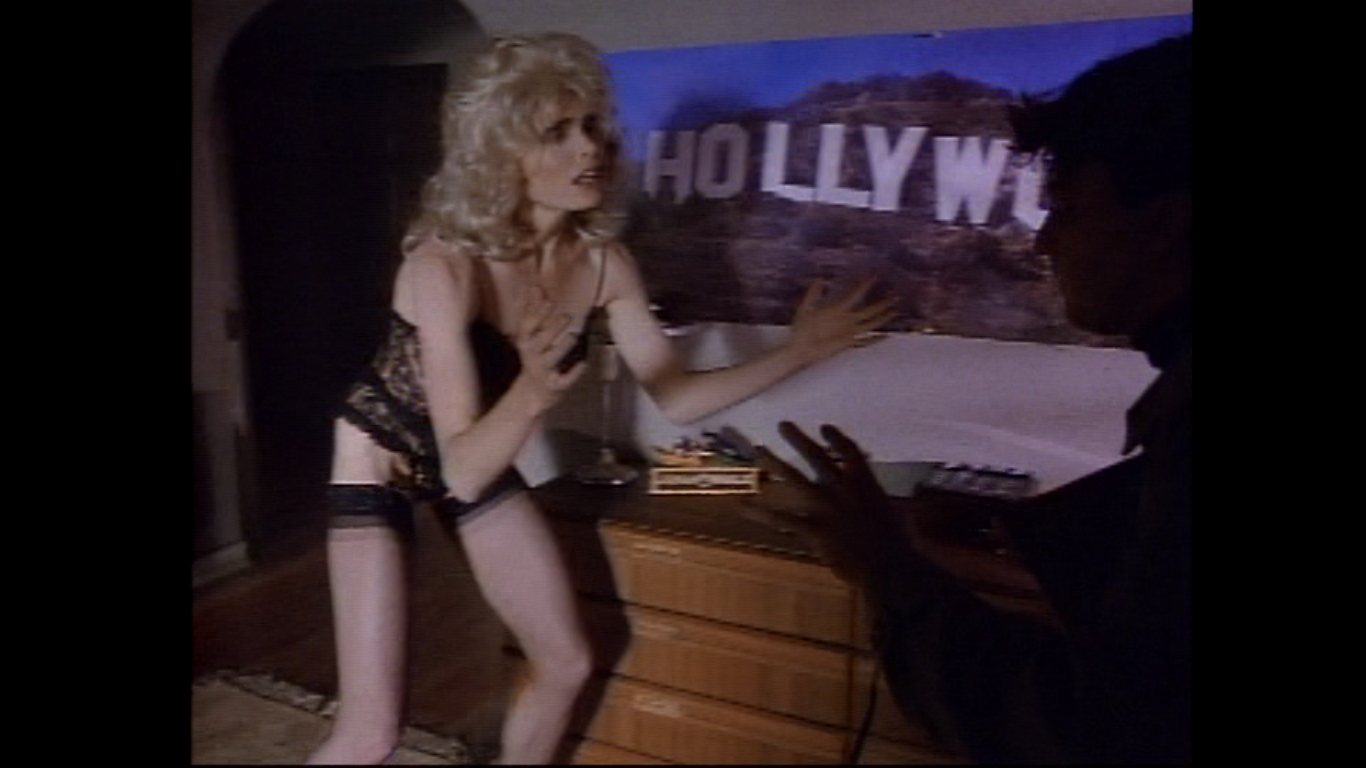
ahplittlesleep02Barbie Hallem is pulling a Zou Bisou Bisou, making herself the center of attention at a proper conservative 50’s party where all the men are wearing ties and the dames have not a tattoo to be seen.

For a straight-laced house party (and episode of a 50 year old TV show), Barbie’s dance is very seductive.  She is swinging them hips and showing off some skin in that spaghetti — or at least linguine — strapped little number.  But, everyone seems to be enjoying her display, smoking cigarettes, drinking cocktails, snapping fingers, clapping along, laughing.

All except the chick on the top-right.  She is immediately identifiable as the heavy in this piece — alone, self-absorbed, jealous.  The strange thing is, after this obvious bit of wordless exposition, that’s it for her.  She is never seen again.

Barbie begins dancing with one of the men, then orders him to go fix her a Horse’s Neck. While he obediently fetches her drink, she goes out on the balcony and swaps spit with an older man (an action I encourage in young blonde floozies).

When her dancing partner finds her with the drink, he asks why she does things like that.  She very reasonably explains, “I did it because I wanted to.”  Despite being 1:00 in the morning, Barbie decides she wants to go to the mountains to see a cabin which she recently inherited.  Her boy-toy tags along.  When he complains about her driving, she ditches him and drives off.

Unfortunate composition as the visor makes her head look flat.

Unfortunate composition as the visor makes her head look flat.

She pulls up at Ed Mungo’s Cabins & Food and orders a black coffee.  Ed tells her the other customers there have just come off the mountain where they have been searching for his brother Benny, who killed a girl; and her little dog, too.  Which would explain why they are all packing rifles.

When she arrives at the cabin, she finds a man (Vic Morrow) trespassing there.  Quite the dapper host, he is eating a can of beans opened at the wrong end, and offers her a generic beer.  After taking a swig, she turns on the record player and starts dancing again.  When he tells her his name is Benny, she thinks it might be time to leave.

He can tell she is scared and thinks it is because he killed the girl’s dog which, to be fair, had bitten him.  He seems to not know the girl has been murdered.  When Ed shows up there is a confrontation when Barbie tells Benny that Ed actually killed the girl.

Benny and Ed get into one of the best fights I’ve ever seen on TV.  The hits look real, the sounds are not quite the usual fake slaps, they take some good falls — really good stuff.

ahplittlesleep21There is a nice twist which might have played out better had TV not been so restrained in the 1950s. Benny is clearly intended to be mentally challenged — in the bar, Ed refers to him not being a boy “in most ways,” and he doesn’t seem to know what is going on with his brother or the girl; plus, he is named Benny.  But his condition is so subtly implied that it is very easy to miss.

The audience makes certain assumptions based on believing Benny to have all his marbles.  This ends up undermining the ending.  However, it still ends up being a nice story.

What really carries the episode, though, is Barbara Cook as Barbie Hellam.  She is attractive, but not classically beautiful, and not the standard Hitchcock blonde babe. However she is something much more that the sum of her parts.  When she is dancing at the party, or even just driving in the car, she is absolutely smoking.

Post-Post:

  • AHP Deathwatch:  Barbara Cook is hanging in there at 87.  She had no IMDb acting credits after 1962, but was a big star on Broadway and singing in cabarets.  In 2011, she was one of the recipients of the Kennedy Center Honors.
  • Vic Morrow was less fortunate, dying in 1982 when a helicopter crashed on top of him while filming a scene in The Twilight Zone Movie.
  • Was the upside down bean can a sign of Benny’s mental issues?
Night Gallery – A Question of Fear (S2E6)

ngquestion02Just as yesterday’s Love-Potion-Gone-Bad story is a staple for a show like Tales from the Crypt, a Spend-the-Night-in-a-Haunted- House episode is to be expected from a horror series.

Fritz Weaver, a famous skeptic, agreed to such a challenge and is relating the story to his pals at the club.  He came out a believer and has the white hair — gained overnight — to prove it.

Now it is an eye-patched Leslie Neilsen who is skeptical.  As he clears the pool table, he says he does not believe in ghosts and thinks that Weaver is just a coward.  Naturally, Weaver bets him $10,000 that he can’t spend “one whole night in that house without being frightened to death.”

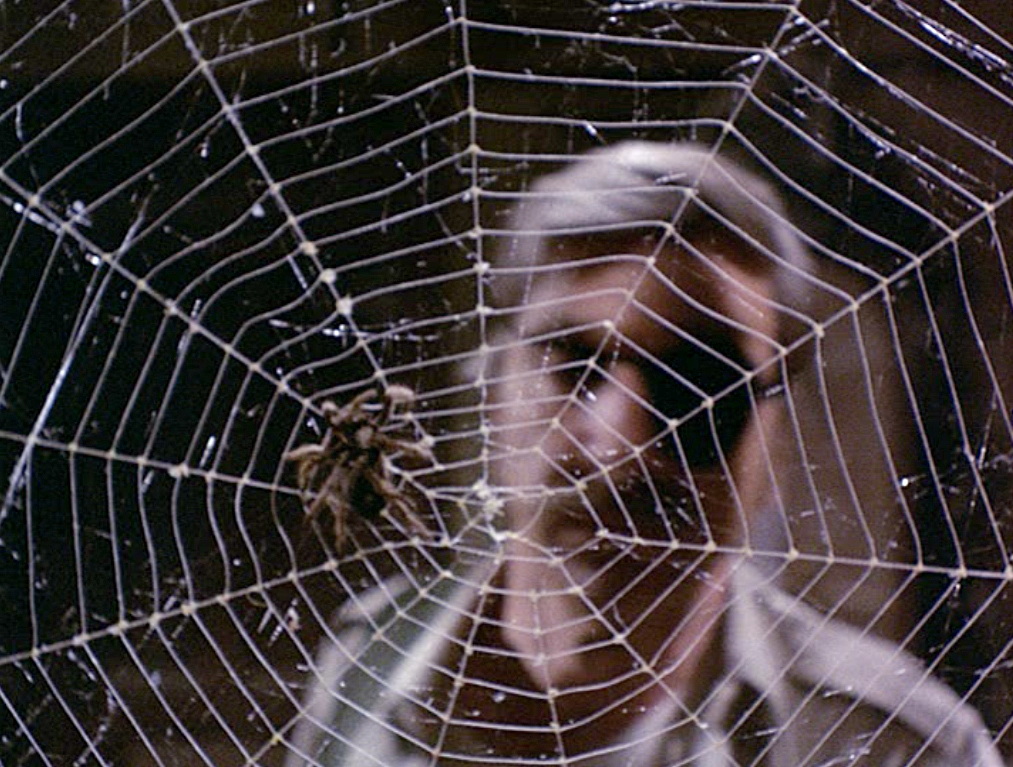
ngquestion06Weaver drives Nielsen to the house and drops him off at sunset.  Inside, he finds it run-down and covered in spider-webs, and spiders.  He hears voices and sees apparitions. Displaying the same sophisticated strategic acumen as Lt. Worf, he pulls a gun on the apparition.

He continues through the house followed by apparitions, hearing ghostly laughing, finding drops of blood, slimy trails, bricks where windows should be.  He breaks from his exploration of the house to get some coffee from his thermos and have a smoke.  He is interrupted by someone banging on the piano.

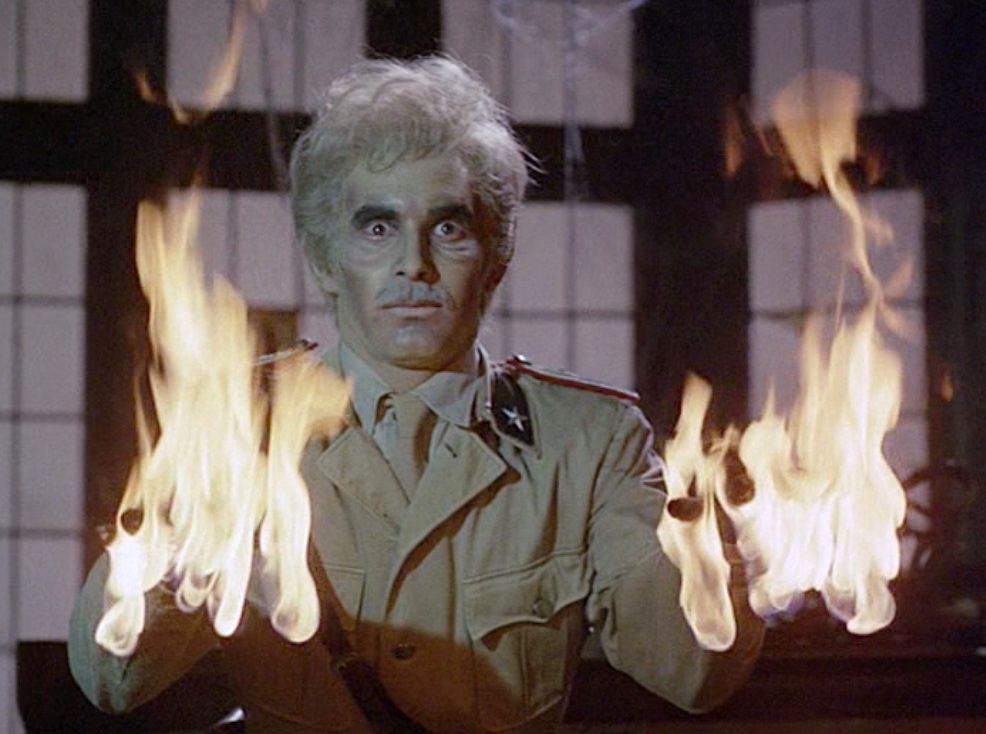
He finds a man in uniform slamming his hands on the keys.  The man’s hands burst into flames, but Nielsen notices a cable running to the man’s boot — a robot.  Convinced that this whole night is a sham, he goes upstairs to the bedroom.  He finds it clean of cob-webs and even has a nice fire going.  He checks under the bed and finds another cable which he cuts.

ngquestion09He lays in bed and is shocked as restraints pin him to the bed and a sharp pendulum begins swinging at his throat.

The  alarm clock goes off and he happily goes downstairs.  He goes into the kitchen and Weaver appears on a TV screen — with his hair its original color.  He tells Nielsen to go ahead and eat while they talk.

Weaver tells him of his father, a soldier in Mussolini’s army.  He protested that all he wanted to do was get back to his civilian job as a concert pianist.  Insisting he had valuable info, Nielsen set his hands on fire.

Weaver drugged the coffee in the thermos and injected Nielsen with a serum while he was asleep.  Weaver offers a proof he is not bluffing, his colleague who is in the basement, and received the same injection.  He is now a slug-like wad of skin and no bones like Eugene Levy in Skeleton.

Nielsen does actually panic as he understands now the significance of the slimy trails he has seen in the house.

The ending could have gone two ways, and I think I would have rather seen it take the other slimy path.  However, the performances are strong, there is some cheesy creepiness in the house, and it is a fun ride.

Post-Post:

  • Twilight Zone Legacy: Fritz Weaver was in 2 good episodes.
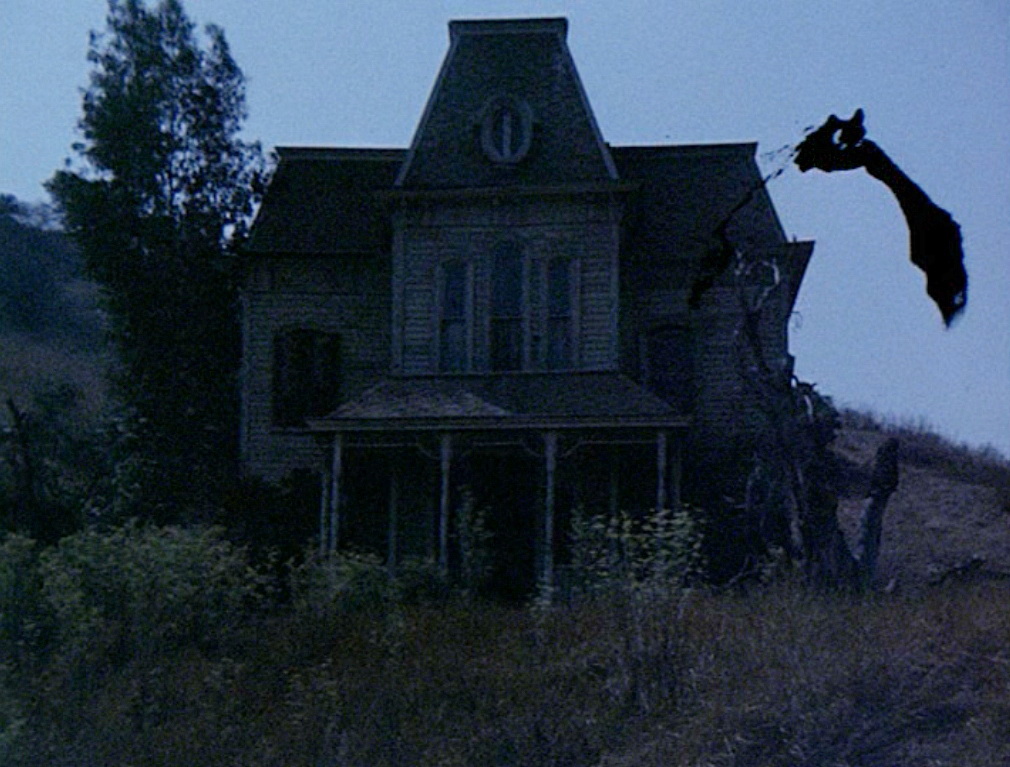
  • This was the same house used in Psycho.
  • Skipped Segment: The Devil is Not Mocked.  Another well-worn tale — Nazis take over a castle that turns out to be occupied by vampires.  Told many times in the 60s-70s and with far more cleavage.
  • Also, don’t make the head vamp literally be the Dracula — that’s just hokey.

Servant of the Beast – L. Patrick Greene

pulpfiction01Kopjies, basilisks and klipspringers — oh my! Despite the presence of this impenetrable vocabulary on just the first page, this one goes down easy even being the longest story in the collection so far.

It is told in the same stripped-down style as the adventure stories of Arthur Conan Doyle or Edgar Rice Burroughs which were written less than 20 years earlier.  White explorers, black natives, dubious tale of a lost treasure; really, all that is missing is the old solar eclipse gag.

A hunter has his site trained on an antelope by the river.  His attention is diverted by another animal — a man — who approaches the river for a drink.  With Oswaldian efficiency, he puts a bullet in the antelope; then, before the man can take cover, he gets off another shot which fells the man whose body is then carried off by the river.

The hunter, Burgess, strolls back to camp, “whistling a cheerful tune” with the antelope slung over his shoulder.  The sickly Professor Compton and his hot daughter Dorothy are happy to have some food to speed his recovery.

The party is in Africa seeking a lost valley said to be teeming with riches.  Most of their native carriers have fled taking their provisions with them.  Only the giant Jan has remained.  Rounding out the group is the absent Dick Harding who is vying with Burgess for Dorothy’s affections.  Say, you don’t think . . .

It is noted that Burgess, the backer of this expedition, is rich.  This pleases her father who is worried for her security.  On the other hand, his competition is named Dick Harding, which pleases Dorothy.

When he does not return, Dorothy says, “I’m anxious abut Dick.”  She and Jan go searching for him.  Down by the river, Jan determines from his spoor that he entered the river but did not make it to the other side.  He must have been washed away with the current and drowned.

They discover Harding’s pith helmet with 2 bullet holes — wow, Burgess is Oswaldian. Because Dorothy heard two shots and Burgess slyly claimed he did not miss, she accuses him of killing Harding.

Like Pete Meadows in Satan Drives the Bus, Burgess illustrates why your first call should always be to a lawyer.  He says, “Yes, I shot him and now there’s nothing stands between us.  You can’t prove anything.”  Well, the two witnesses you just confessed to might disagree.

Jan is ready to toss him off a cliff, but Dorothy convinces him to just tie Burgess up instead.  Just as Burgess is restrained, Harding reappears, the bullet having only grazed his noggin.  Fortuitously, after he was almost killed, he was washed downstream where he found a Shangri-la-esque tunnel leading to the fabled valley.

All members of the group are soon abducted and split up.  Harding and Burgess end up together in a cavern.  They are able to put that petty MURDER attempt behind them and work together.  They are soon reunited with Dorothy and Professor Compton.  Although alive, none have made out as well as Jan who has been made king of the tribe and given quite the fly ensemble with ostrich feathers, a kilt and a gold headband.

With Jan as their protector, the group is fine until Jan and Harding save a native girl from being sacrificed to a leopard.  Burgess allies with the Sherry Palmer of the tribe, but things don’t work out for them.

All the others come out winners.  Harding gets Dorothy, Dorothy gets Dick, and the happy couple & Professor Compton get the diamonds and will wallow in fabulous wealth for the rest of their lives.  Jan remains as king of the tribe to live in a mud hut and sleep on the dirt.

Post-Post:

  • First published in Action Novels, April 1930
  • Also that month: Hostess Twinkies invented.  Yada yada . . . still edible.
  • The word spoor is used 20 times in this story.  As I had originally confused this word with scat, I was baffled why everyone was leaving a trail of shit.
  • Jan calls all the white folks Baas which I assume is meant to be boss.  But why the strange spelling?  Surely it is not his native tongue.  Is it dialect?  It really looks pretty much like it would be pronounced just like boss.

Tales from the Crypt – Loved to Death (S3E1)

tftclovedtodeath02Directed by the nephew of Herman J. Mankiewicz, writer of Citizen Kane.  Written by the first cousin of the Director.  Starring Mariel Hemingway, grand-daughter of Ernest Hemingway.

It would be easy to blame the nepotism of Hollywood, but these people have some decent credits among them.  Here, though, they came together to produce a pretty disappointing episode.

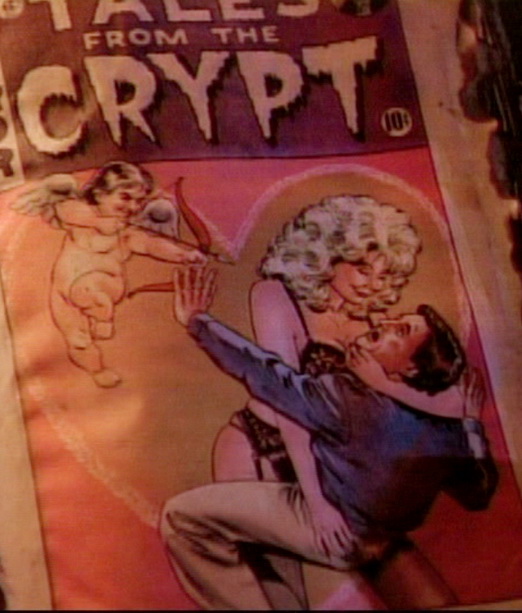
It’s a given that any show which involves fantasy or the supernatural will eventually have a love potion episode.  Maybe two.  I have no beef with revisiting the classic tropes, but you still have to put some effort into it.

The direction is sluggish — once again we have a guy at the helm who doesn’t seem to understand what the show is supposed to be.  At 28 minutes, it is one of the longer episodes and for no good reason.  Just trimming 5 minutes out might have helped.

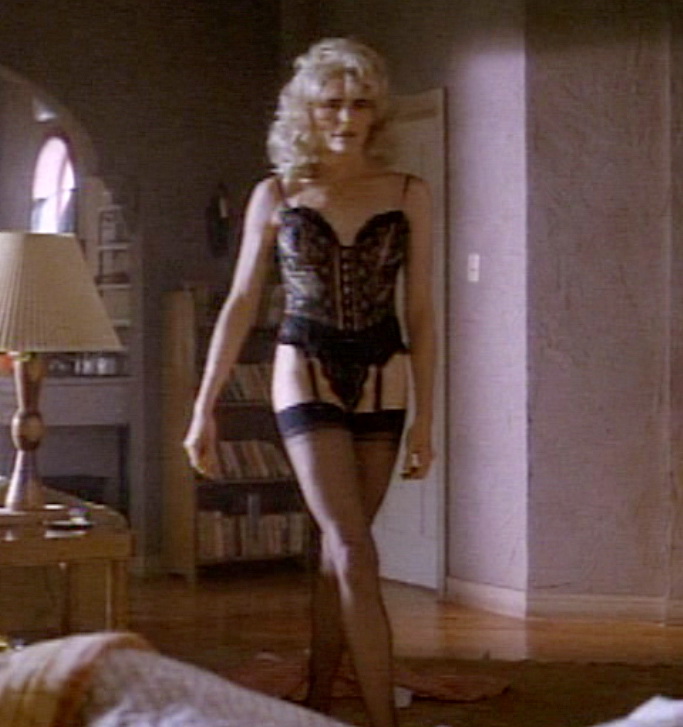
tftclovedtodeath09Sadly, Mariel Hemingway is not much of an actress.  The awkwardness she brought to her role in Star 80 seemed like a great performance, but in retrospect, it might not have been acting.  On the plus side, she looks great in several lingerie scenes, and has insanely nice long legs.

Andrew McCarthy is a screen-writer who becomes infatuated with his actress neighbor. There is a fairly pointless sub-plot with a chain-smoking, mostly unseen apartment manager.  He gets the potion into McCarthy’s hands, but the part seems set up for far more.  General Burkhalter’s sister shows up, which is always nice but also mostly pointless. Yada yada love potion yada yada irony.

There are a couple of fun points, but it kind of loses me when McCarthy slugs Mariel Hemingway.  Overall not worth any more words.

Post-Post:tftclovedtodeath11

Satan Drives the Bus – Wyatt Blassingame

pulpfiction01Allen Sargent is taking a bus trip.  He is killing time by profiling the other passengers. There is the short bald guy with the cigar who must be a salesman; the poorly-dressed country woman who had probably been working in the fields since she was six; the hard-faced blonde lush who had called the driver “baby”; the hard-boiled gangster with the scar who seemed scared; and “on the back seat, a negro sat alone.”

Well, ya can’t accuse him of racial profiling. Sargent doesn’t even bother to come up with a story for him. He’s like Franklin in Peanuts — just the black guy.

There is also a priest, an old shaggy-haired hobo type, the driver and Sandra Bullock.  OK, just a pretty girl — which I gotta think is a rarity for bus travel — but I re-watched Speed just before reading this.  Sargent thinks, “With her to look at, this trip might not be so bad.”

As he is drooling over Sandra, the old man jumps up in the aisle and proclaims, “It’s death!  Death and sin!  They are riding with us, and they shall strike; they shall kill us all because someone here has sinned against man and God!”  Sargent sits him down and gallantly inserts himself in the seat beside Sandra.

The guy might have been crazy, but he was right — minutes later, the salesman lets out a scream and keels over dead.  The driver says he will stop in Perry Corners and alert the police.

The “negro” stands and flashes a gun.  He says, “I’m Pete Meadows.  They’re looking for me in Minneapolis for a couple of bank robberies.”  He clearly wants to avoid the cops, but he doesn’t seem to get the concept of laying low.  He might as well have shouted out his home address and Social Security Number while he was at it.

The old man shouts about sin and death again, and this time the country woman drops dead.

The driver begins going too fast.  When Meadows complains, the driver lets out a maniacal, “laughter from hell!”  When he turns, he is sporting the face of a cartoon devil — triangular face, V-shaped eyebrows, pointed ears — signifying true evil, the pit of Hell, vile pestilence; or deviled ham.

Meadows tries to shoot the driver, but he is the next to drop dead, clawing at his throat, tearing bloody flesh from his neck.  The driver next turns his attention to the hard-faced blonde. She begs for time to make a confession to the priest, and the driver generously gives her 2 minutes.  This guy must have had the buses running on time because he kills her 2 minutes later.  And then the scar-faced man.

But there is a nice twist, and the things turn out to have not been so supernatural after all.  A pretty good yarn.

I look forward to the sequel, Satan Pulls the Train.

Post-Post:

  • First published in Ace Detective Magazine, October 1936.
  • Also that month: First commercial flight from US to Hawaii.
  • Pointless Duplication:  The bank robber was named Pete Meadows.  And the guy pretending to be a priest was also named Pete?  Why?