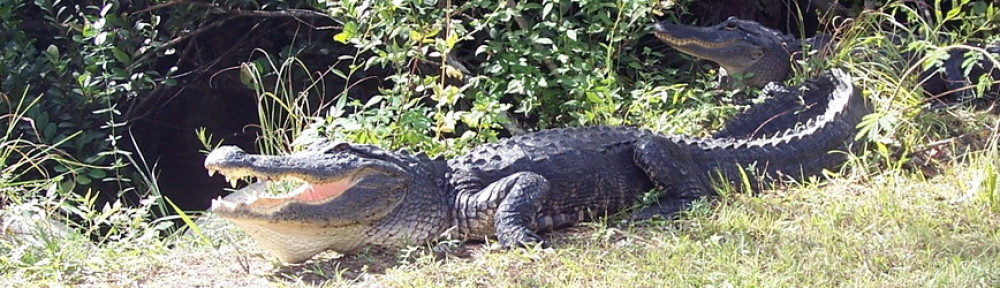

Hey, I’m over here!
Now this is what I like — 10 episodes, I’m in and out. The Veil had studio trouble and was produced for only one partial season that never aired. [1]
Pharmacist Hart Bosworth has had a busy day at the apothecary and is closing up his shop when a woman enters with a gun — an Rx for disaster. She puts two slugs into Bosworth.
At that same moment, aboard a ship 150 miles away, his brother George is preparing for bed. As he goes to wash up, the water in the bowl begins swirling. In the cloudy water, he sees a hand draw a pistol. As with every mystical entity from Gandalf to Obi-Wan, key information is withheld. Rather than the image identifying the shooter, he gets an over the shoulder view of a mystery figure shooting his brother. He might as well have looked in the other bowl with swirling water.
He runs to the captain and asks him to turn the ship back to Dover. That is quite impossible, but he does let Bosworth off at the next port and he catches another ship back.

No, right in front of you!
Sgt. Willmore (Boris Karloff) is inspecting the scene of the crime. Bosworth was shot through the heart and the cash drawer is empty. He acts like it is a Holmesian act of deduction to rule this a robbery. An ear-witness, Mrs. Klink, heard the shots at 9:45.[2]
Mrs. Klink finally gets around to saying she saw the shooter. She saw Albert Ketch running from the shop. The constable “rounds up” Ketch which I’m not sure you can do to a single person. He claims he was just at the shop to collect on a bet.
The next day, George returns to see his fiancee Julie. She confirms George’s vision that his brother was murdered. She tells him Ketch has been arrested, but he seems strangely confident that Ketch didn’t do it. When she asks how he knows that, he refuses to tell her; or us. Julie wisely advises him to pipe down with the magic water bowl talk lest people think he is crazy.

We’re back here! Follow my voice!
George goes back to the shop where Willmore and the constable are still investigating. He tells them Ketch had nothing to do with it, but they are also skeptical. The constable believes George is behind his brother’s murder as he is the sole heir to his estate.
At a local pub, Mrs. Klink tells George that she also saw his fiancee Julie go to the shop before the gunshots. You might think think that would have come up in talking to the police. She describes Julie as a scheming social climber.
Julie finally confesses to George that she killed his brother. Now that he has inherited the apothecary, they can afford get married, and also score some Oxy. She felt that the other women were laughing at her for not being married, that she might get another chance. BTW, the actress was an elderly 26 in this episode.

Turn around, dumbass!
Maybe she’s right. With his new-found wealth, George turns her in; then probably goes after a younger woman.
A fairly dull outing which does not leave me excited about nine more episodes. There were highlights, though. Karloff played gave a good comedic performance that I did not know he was capable of. The supporting cast was all good, except Robert Hardy as George. He had a very strange style where he rarely looked people in the eye as they spoke — no wonder he was a suspect. In conversations, he would usually look up and to the side or stand with his back to the other person.
I also question whether it was a good choice to reveal to the audience who the killer was. It was a little bit of a giveaway anyhow because the killer’s dainty little hand in the vision indicated either a woman or Donald Trump. I guess this is how he was so sure that Ketch was not the killer. If that is the case, though, why didn’t he tell the police the killer was a woman?
Post-Post:
- [1] Something I don’t like: Amazon screwed up the episode titles and descriptions so I had to watch a second episode tonight.
- [2] I defy anyone to watch this scene and not conclude that John Cleese is the bastard son of Boris Karloff.
- IMDb and YouTube.

L to R: John Cleese, Eric Idle, Michael Palin, Terry Jones
 Oh my God. I am really growing to hate John McGiver. He was a very memorable character actor, but a little goes a long way. I remember liking him on an episode of
  McGiver’s insufferable presence might have been forgivable in service of a decent story, but this ain’t it. The good news is, this is his final appearance on AHP. Oh well, let’s get this over with . . .
 Oh, crap.
 As Arthur is washing his hands, Barryvale clears his throat and sits up on the slab. [2] Arthur explains that he is in the funeral parlor, having died the night before. Barryvale believes he was brought back from the dead to assure that his estate is not wasted on a lavish funeral.
 Arthur is distressed to hear this as he apparently would have made a tidy profit on the previous plan with the limousines and singers. Barryvale writes out instructions for his more austere funeral. Then he lays back down and dies again, conveniently on the slab.


 As great as Christopher Reeve was as Superman, there was a stiffness in his portrayal that wasn’t acting. He was able to exploit it for earnestness in Superman and add a comedic element to embody Clark Kent. Those are two fine achievements in a single film, but in other roles, that stiffness served no higher purpose. In that respect, Brandon Routh was the logical heir to the role.
 Tracy wants to have their first child grow up in the suburbs. Some friends suggest they try The Commons. Well there was that thing where The Commons weren’t so welcoming when they thought the friends would have no more kids . . . but that was probably nothing.
 The next night at the homeowner’s association meeting, her husband is asked what the appropriate punishment for his wife should be. Apparently his choice was to have his wife stand in the town square in a pig mask and have garbage thrown at her because that is what Bobby witnesses the next day.
 Five years later, Tracy is the new HOA President. We see Bobby staring despondently at her through the window as she indoctrinates a new couple. The twist is that his legs have been amputated because he ran, but this ending seems botched in a couple of ways. It is revealed that he is in a wheelchair, then the amputation is revealed a few seconds later. I guess they were going for a