Outer Limits – The Voyage Home (S1E15)

Sci-Fi stories are like westerns.  Put a wagon out in the desert and you are half way to a decent western.  Put some people on a spaceship, and you’re halfway home with me.

olvoyagehome01It is day 315 of the Mars III Mission.  The math suggests that they have been on the surface for about 100 days.  Thanks to some brilliant scheduling, they are exploring a cave a few hours before liftoff rather than say, going over the pre-launch checklist, resting up for the most important procedure of the flight, or spelling their names in the regolith.

Their dedication pays off, at least in the short run, as they find some writing in the cave.  Nearby, they discover a pod.  Following in the tradition of brainiacs from Alien to Prometheus, their first instinct is to take the pod back on the ship.  Short of putting their lips on it, there could be no worse idea.  Nothing good ever comes in pods —  it’s always evil murderous aliens; or peas.

The pod emits a burst of light and gas, knocking the 3 astronauts unconscious.  They wake up an hour later but are due to lift off in a few hours so can’t explore or document the find.

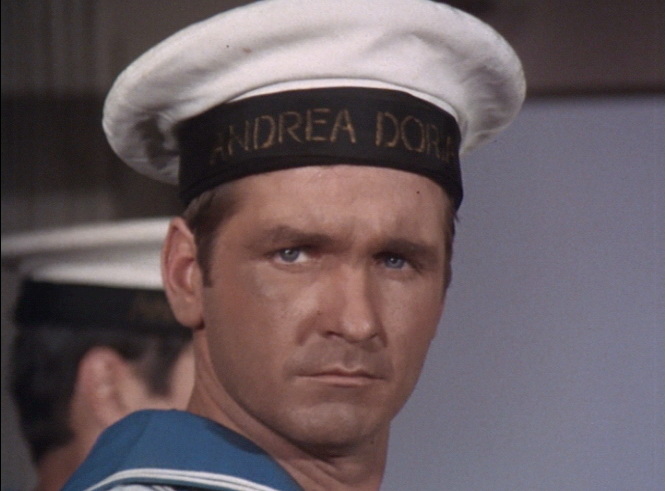
All is well for the next seven months as they are en route to earth, only 3 days from home.  As they are watching football, there is an Apollo 13-esque explosion.  They lose communications with NASA (which is now apparently fully staffed by one oriental woman), and also lose half the oxygen.  Pete Claridge (Michael Dorn) finds some goo on a bulkhead and takes a sample.  It turns out to organic and multiplying.

Ed Barkley goes below to check on the equipment as the temperature soars to the 120’s.  Claridge says he is looking forward to getting back to his lakeside cabin, and gets a skeptical look from Al Wells, which plot-wise makes no sense.  We find out later that Claridge is an alien — why would the alien know everything about his host, but make up a cabin?

As the temperature gets unbearable, Wells goes nuts from the heat and turns the cooling back on almost killing Barkley.  Claridge — the crew doctor — decides to draw some blood from Wells to be sure he is OK.  And by “draw” I mean “inject” and by “blood” I mean “alien juice.”  When Barkley comes back up to the cabin, Wells is hiding a wound on his arm that is oozing green slime.

olvoyagehome02When Barkley spots this, Wells transforms into an alien.  Barkley forces him  into the airlock with a fire extinguisher. When Claridge re-enters the cabin, Wells has transformed into a human again and pleads with him to stop Barkley from opening the hatch.  Before Claridge can stop him, he blasts alien Al Wells out into space.

After they lose another power cell, Barkley goes below deck where he finds a space suit with Claridge’s body in it.  The alien Claridge catches him and fesses up saying they didn’t have time to eject that body.

His species is from far away and went to Mars hoping to be discovered. Barkley makes it clear he does not intend to allow that ship to return to earth.  Claridge seems like a pretty benevolent alient, and dangles the cure for cancer in front of Barkley.

They begin working together to save the ship, but when they get communications back, Claridge’s family is on-screen to greet him.  He pulls off his act very well, but Barkley can’t allow him back on earth.

Once alien Claridge sees what Barkley intends to do, he gets very self-righteous.  He says their species is millions of years old, therefore it is their right to take puny human lives to ensure their survival.  Barkley alters the angle of re-entry and they explode.

They get a  little too cute building paranoia at the expense of logic, but it ends up being another good episode.

Post-Post:

  • Director Tibor Tobaks’ work was last seen in Blood Brothers.  Other credits include Mansquito, Ice Spiders and Mega Snake.
  • Grant Rosenberg also wrote the previous episode.
  • Claridge is played by Worf from Star Trek TNG.  He does a great job here and I was surprised he had never done anything outside of Star Trek.  Until I checked his IMDb page and saw he has a huge resume; even including the original Rocky where he played Apollo Creed’s bodyguard.
  • OK, whales also come in pods, and they’re cool.  But they also come in gams, which are hot.
  • They are returning to Earth from Mars.  It is hard for me to envision a route wherein the sun would be at their backs:

olvoyagehome03

Ray Bradbury Theater – The Lake (S3E3)

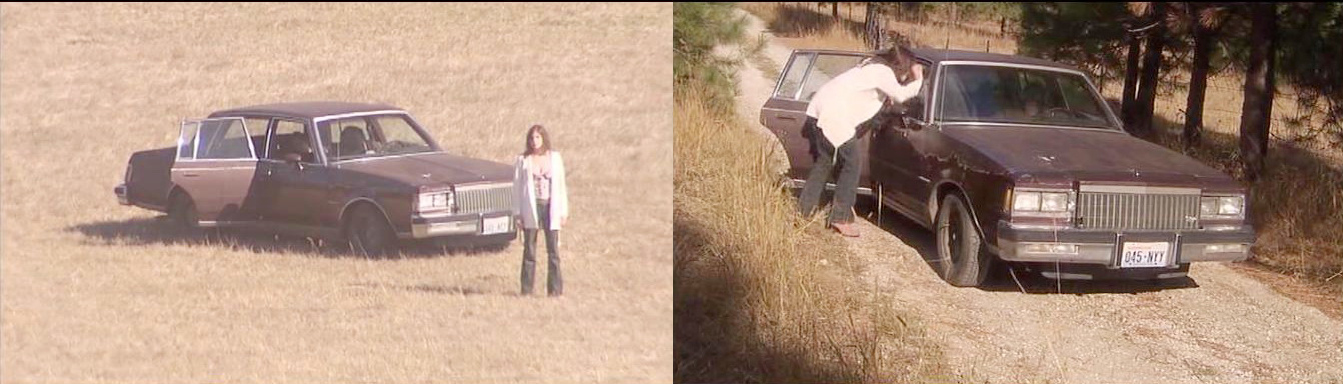
Oh, bloody hell.  I was pretty generous with the previous episode.  But how much can a man take?  And WTH — I though they were back filming in the USA!  That ain’t no American car.

Douglas is taking his fiancee back to the lake where he spent his summers as a boy.  He flashes back to the sand castle he built that attracted the attention of his first crush, Tally.  After it is knocked down by a bully, they rebuild it together.

Tally runs to the lake for a swim, but Douglas is afraid of the water.  This goes on for the entire summer until the day Tally is to leave the lake.

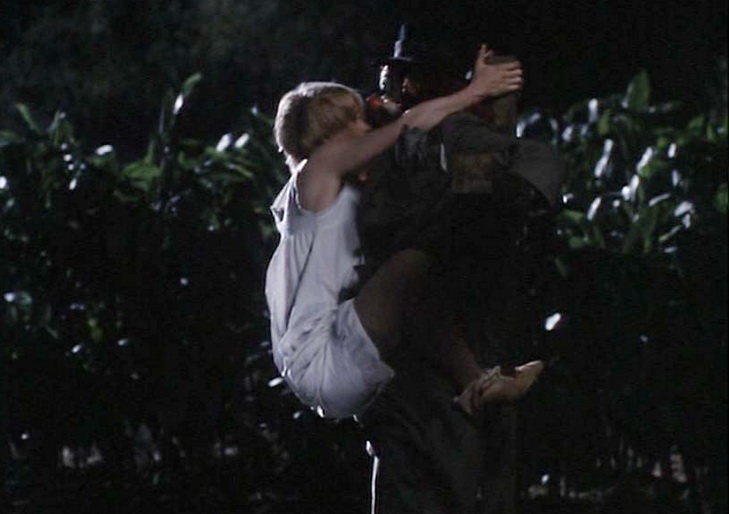
rbtlake03In the present, Douglas sees a sand castle on the beach.

In the past, Tally has disappeared in the water.  The lifeguard and other swimmers are unable to find her as Douglas waits scared on the beach.  Douglas wipes away half the castle, awaiting Tally to come back and rebuild it.  Eventually the rain and tide take it away.

In the present, as he approaches, Douglas sees it is really half of a sandcastle, just as he had left years ago.  He begins building the other half.  Out on the lake, a man in a rowboat is coming in.  He has found a girl in the water.

The girl is wrapped in a tarp and seems to be dead.  So what is the point?

And how is finishing the sand castle the catalyst to bring her back?  It would have made more sense for the sand castle to appear fully formed, and have him destroy half of it to lure her back to this world.  As a corpse.  Hunh?

The last shot is the tide coming in to wash away the sand castle.  Pretty much like this episode . . . a day later it will have left no trace in my memory.

Post-Post:

  • This is the Pat Robins’ only directing credit.  He (?) did go on to be Script Supervisor on two of the Lord of the Rings movies.  As his few credits were New Zealand productions, I’m assuming this episode was filmed there.
  • Exactly how big is this lake that has the tide rolling in and out?  I’m surprised there were no surfers.  The largest lake in NZ is 238 square miles.  By comparison, the smallest Great Lake is 7,500 square miles.
  • This was the story that impressed Bradbury’s future wife enough to go out with him.

Alfred Hitchcock Presents – I Killed the Count (S2E25)

Well, this had to be a rarity in the 50’s.  Episodes 25 – 27 of this season are a single three-part story.  I guess airing it as a 90 minute very special episode would have blown people’s minds back then.  Sadly, it was not directed by Sir Hitchcock.

Like most (or maybe all) AHP episodes, I killed the Count is based on an existing story.  It was a play written in 1937, a British film in 1939, and produced on Broadway in 1942.  Who says Hollywood just ran out of ideas?

ahpikilled01The boss’s daughter, Pat Hitchcock, cast as always in a non-glamorous role (though I can’t say it is against-type), is a maid bringing tea to Count Mattoni. Like most men, I suspect, he does not respond to her.  In his case, however, it is because he was been shot in the head.  It must have been very unusual for AHP and 50’s TV in general that the wound is shown, with a darkened circle for the bullet hole, and trickles of blood running down his face.  Very Lincoln-esque.

AHP regular John Williams is Inspector Davidson, on the scene from Scotland Yard to determine what happened.  The first witness is Polly the maid (Pat H).  She claims to have been mixed up in so many investigations that this is old hat to her.  She is “always losing ‘me’ job because my employer got arrested or shot or something.”

She last saw the Count when she was turning down his bed last night.  Not the first time she has experienced a turn-down in a man’s bedroom, I imagine. [1]  Polly says he was drunk and no gent.  She is dismissed by Davidson and we meet new academy graduate Detective Raines who has got to be relative of Simon Pegg.

The Inspector finds a letter from Lord Sorrington to Mattoni cancelling a dinner invitation.  Raines calls the Lord who claims to have never heard of Mattoni.

A Mr. Rupert has rented the adjoining flat, but he has never been seen.  Only Mullet the lift operator has seen him.  They go into his flat and find the missing cartridge.

ahpikilled02

What the hell? No justice, no peace, baby!

Back in Mattoni’s flat, Raines finds a letter addressed to an American, Mr. Froy.  Raines begins reading the very odd letter which pauses after a few sentences and the letter turns into a  play-by-play of the action in the room: “Froy has just come in the room, I can see him in the mirror, he has gun, if anything happens, you will . . . .” and then it stops.  Davidson believes Froy and Rupert are the same person.

Johnson the day lift operator says he never saw Rupert, but would recognize Froy.    Polly also never saw Rupert.  Mullet the night liftman can identify Rupert.

Froy arrives and says he was not at the flat last night.  Davidson shows him the letter and Froy admits he was there and confesses to the murder.  Davidson brings in Mullet to confirm that Froy is also Rupert but Mullet says this looks nothing like Rupert.

Lord Sorrington arrives.  He says he has never heard of Mattoni.  Davidson shows him the letter and he admits knowing him, but denied it because he was an unsavory character.  Then Mullet IDs Sorrington as being Rupert.  Finally Sorrington admits that he did rent the adjoining flat under the name Rupert.  It was just coincidence that they knew each other, he says.  Then Davidson products the letter with the address.  Having been caught in multiple lies, Sorrington confesses that he killed Mattoni.

Part II – Strangely, Hitchcock’s opening remarks are played twice before this episode.  Whether it was a mistake by NetFlix or AHP was just padding this episode out to 3 weeks, I don’t know.  Also not known: how the hell people kept this plot straight for a week.

Sorrington saved this bon mot for Part II: his daughter was married to Mattoni.  Did he think that wouldn’t come out?  She had left him a year ago, however.  Her time with Mattoni ruined her and devastated her mother to the point of death.  So Sorrington had a motive.  Sorrington relates in flashback how he killed Mattoni.  His gun was found at the scene.

Froy tells the Inspector he killed Mattoni because he was in love with Countess Mattoni, Sorrington’s daughter.  An incriminating letter from him is found on the scene.  He also relates in flashback how he killed Mattoni.

Louise Rogers comes in for questioning, but has no info.  Next the police question a dancer, Miss LaLune who lives on the same floor.  Mullet is questioned and finally confesses after his fingerprints match those on the Count’s bloody money.  At this 3rd confession, Davidson flips out to wah-wah-wah music.

Part III – Another duplicated intro.  Hitchcock gets winded as he gives a recap.

Mullet says he had lost at the track and was stealing a few quid from Mattoni each night as he was put to bed.  This night, Mattoni caught him.  After a struggle, he was shot.

All of the confessors are taken to Scotland Yard.  When they get some privacy, Froy and Mullet discuss “who drew the black ace” to do the actual murder.   When Sorrington arrives, all three say to each other that they did not kill Mattoni.

Ha-cha-cha, Aunt May!

Louis Rogers has come in and confesses.  She is the Countess Mattoni, the dead man’s widow, and Sorrington’s daughter.  She claims she shot Mattoni during a struggle and has scratch marks to prove it.

Raines points out that it is illegal for Davidson to charge all 4, so they stick to their story and can’t be arrested.  Raines whimsically opines that it is lucky the Count deserved to  die.

OK, he’s no Simon Pegg.

Post-Post:

  • [1] OK, that’s just gratuitous and makes no logical sense.  Why would they have even gotten to the bedroom if — pffft, not worth the time.
  • AHP Deathwatch:  Rosemary Harris, who played Spiderman’s Aunt May 45 years later, is still alive.  Also Pat Hitchcock and Jered Barclay.
  • John Williams is tied for the 2nd most AHP appearances, with Pat Hitchcock and Mr. Drysdale from the Beverly Hillbillies among others.  Strangely, all but one of Williams’ appearances are in the first 2 seasons. [UPDATE] IMDb seems to have re-tallied the results.  It’s rigged!
  • [UPDATE] Weird confluence:  Rosemary Harris, John Williams, and Anthony Dawson were all also in Dial M for Murder, but not the one directed by Hitchcock. For some reason, auteur George Schaefer [2] felt the need to remake it (or technically the original play, I guess) for TV four years after Hitchcock’s movie.  Actually, Williams and Dawson were in both versions.
  • [2] Schaefer has another one of those oddly fascinating IMDb pages.  He also remade Little Foxes for TV 15 years after the Bette Davis version, remade Meet Me in St Louis for TV 15 years after the Judy Garland version, remade Lost Horizon for TV (as Shangri-La) 23 years after the Frank Capra version . . . Jesus Christ, he also remade Arsenic and Old Lace, Teahouse of the August Moon, Pygmalion, Abe Lincoln in Illinois, Inherit the Wind, Our Town, Harvey, Anastasia, and others.  He also managed to squeeze in a lot of Shakespeare (more bloody remakes!) and two Barry Manilow specials.  To be fair, he was hugely respected by his peers, racking up an impressive list of awards.
  • WTH – Scotland Yard is 458 miles from Scotland.  It was named for the street it was on, not the country.

Night Gallery – Clean Kills and Other Trophies (S1E4)

ngclean01Colonel Dittman leads his son Archie Jr. and lawyer Jeffrey Pierce into his trophy room. Sadly, he is not a bowler, so the trophies are the heads of animals that he has killed.  He points out his servant Tom who he says is an Ibo, son of a tribal chief.  But he’s OK because he was highly educated in England.  So now he is a servant.

“Quite a specimen, isn’t he,” the Colonel says proudly.  He tells the Pierce not to be misled by the Oxford accent and tailored clothes.  He has never really left the jungle, still carries amulets, and believes in black magic.  “A pagan savage, like all of his breed.”  Thank God MSNBC was not alive to see this.

The Colonel tells Pierce that hunting is his life, there is no game he hasn’t stalked and killed.  Pierce finally brings Archie Jr. into conversation mentioning that he just graduated from college.  The Colonel says it is Jr’s. one achievement in life other than swilling copious amounts of brandy.  He is clearly disappointed by his son and steers the conversation back to his trophies.

ngclean03Pierce asks Archie Jr. if he hunts and his father mocks him as being a “dish of jellied consomme”, also a waste of space, lacking character and guts; a “pallid hand-wringer” who the colonel fears will take his inheritance and give it to one of his causes:  “Senegalese Unwed Mothers, Pickaninny’s Free Lunch Program or the Women’s Liberation Movement.”

This episode originally aired on January 7, 1971 — six days before the debut of All in the Family.  The template is similar, though.  The Colonel is Archie Bunker and Archie Jr. is Mike Stivic with better hair (but unlikely to marry a busty blonde).

The Colonel taunts Archie Jr. about the trust fund he is due to receive.  He wants to add a codicil that his son must kill an animal within 15 days or the trust will be dissolved.  The Colonel even mocks Archie Jr’s. passive reaction to this threat.

If Archie Jr. does not come through, the Colonel will take his $2 million and purposely squander it on risky investments.  Archie finally lashes out and asks his father if it is really so inconceivable that he could kill something.  The Colonel says it is inconceivable that he “sired such a mewling, sniveling, self-indulgent milksop.”  This guy is priceless!

Archie mans up and points a rifle at the Colonel, but Tom intercedes, taking the rifle.  The Colonel tells Tom to see Archie Jr. to bed and leave a light on as “he’s probably afraid of the dark, too.”  Zing!

Archie Jr. admits his father is a 20th century man, probably closer to the norm than himself.  He will try to shoot a deer tomorrow.

That night the Colonel finds Tom in the trophy room praying.  Despite Serling’s best liberal intentions, he turns Tom into the amulet-wearing believer in pagan gods that the bigoted Colonel accused him of being.

The next day in the woods, Archie Jr. and the Colonel spot a deer.  Archie Jr. raises the rifle and lines up the shot. But he hesitates.  The Colonel swats the rifle and the shot goes awry enabling the deer to escape.

ngclean04

Does no one care about composition? The antlers have to go right into his forehead?

As Pierce is leaving, Tom says the Colonel has been punished for making Archie Jr. fire at the deer.  Last night Tom prayed to his gods that “the hunter should know what it is like to be the victim.”

The Colonel was so over-the-top nasty that he was pretty fun to watch.  Serling did not give him a worthy adversary, though.  Archie Jr. is supposed to be a much more passive, sensitive soul than his old man.  Unfortunately, Serling attempts to achieve this by giving him nothing to do.  He has very few lines despite being present in nearly every scene.  When he does let loose, it is in an effeminate, high-pitched screech.

And the peace button is a nice touch.

Post:Post:

  • Twilight Zone Legacy:  None.
  • Ironically, Archie Jr. (Barry Brown) shot himself at age 27.
  • Tom went on to play Boomer in Battlestar Gallactica.

No, the one in the 1970’s.

Night Gallery – Make Me Laugh (S1E4)

The first original tale by Rod Serling and it is a turd.  Well, it is credited as an original, but it should say “Based on a story by Charles Beaumont” as it shares the same exact twist as A Nice Place to Visit from The Twilight Zone.

Godfrey Cambridge plays a comedian and it is excruciating to watch.  OK, his character is supposed to be bad, but this is just painful.  It is inconceivable that he is making a living at it.  After his act, he talks to his manger Tom Bosley who has managed him for 16 years, also inconceivable.  The club owner played by Grandpa Munster Al Lewis comes in and fires him — conceivable.

Cambridge tells his manager he would give everything he’s got just to make somebody laugh.  Later in a bar he gets word his manager has bailed on him.  A guru, complete with turban approaches him. He must perform one miracle a month. Cambridge asks the guru to make it so he can make people laugh.

The guru obliges.  Soon Cambridge is hugely successful, but is left unfulfilled as people laugh at everything he says.  His manager even comes back.  When he tries out for a serious dramatic role, they all laugh at him.

This is the same revelation as in TZ’s A Nice Place to Visit — that there can be too much of a good thing.  Actually it makes a little more sense here.  In the TZ version, the small time hood finds himself in the “hell” of always getting the winning hand, always getting the perfect roll of the dice, and never having the dames play hard to get.  OK, the thrill might have gone out of gambling, but did he really get tired of the girls?

In TZ, the character is revealed to be dead and in hell.  In NG, Cambridge is alive, but we experience the hell of watching him.  He begs the swami to give him a new wish — he wants to touch people, to bring a tear to their eye.  That happens as he is hit by car.  A woman selling flowers nearby sheds a tear of sorrow.  The audience sheds tears of joy.

The real shocking twist here is that this episode was directed by Steven Spielberg.  He didn’t write it or cast it, but he sure didn’t do much with what he was handed.  There are stories of turmoil on the set and him being fired, but ultimately most of the scenes were directed by him.

Post-Post:

  • Twilight Zone Legacy:  None.
  • Serling did already have one segment that was an original, the embarrassing Nature of the Enemy.  I am doing his memory a favor by pretending that short “sketch” does not exist.
  • Six years later, Cambridge was dead at 43.  He had a heart attack on-set playing Idi Amin in Victory at Entebbe.  Amin claimed his death was an act of God . . . the actor who replaced him lived to 81.
  • If I knew this was the next act on the bill, I wouldn’t be so quick to boo Cambridge off the stage; I would keep him there like Jerry Lewis on the telethon.  Ladies and gentlemen, the Rocky Mountain Rockettes:
ngmakeme05

Yikes!

ngmakeme06

Again, I say Yikes!